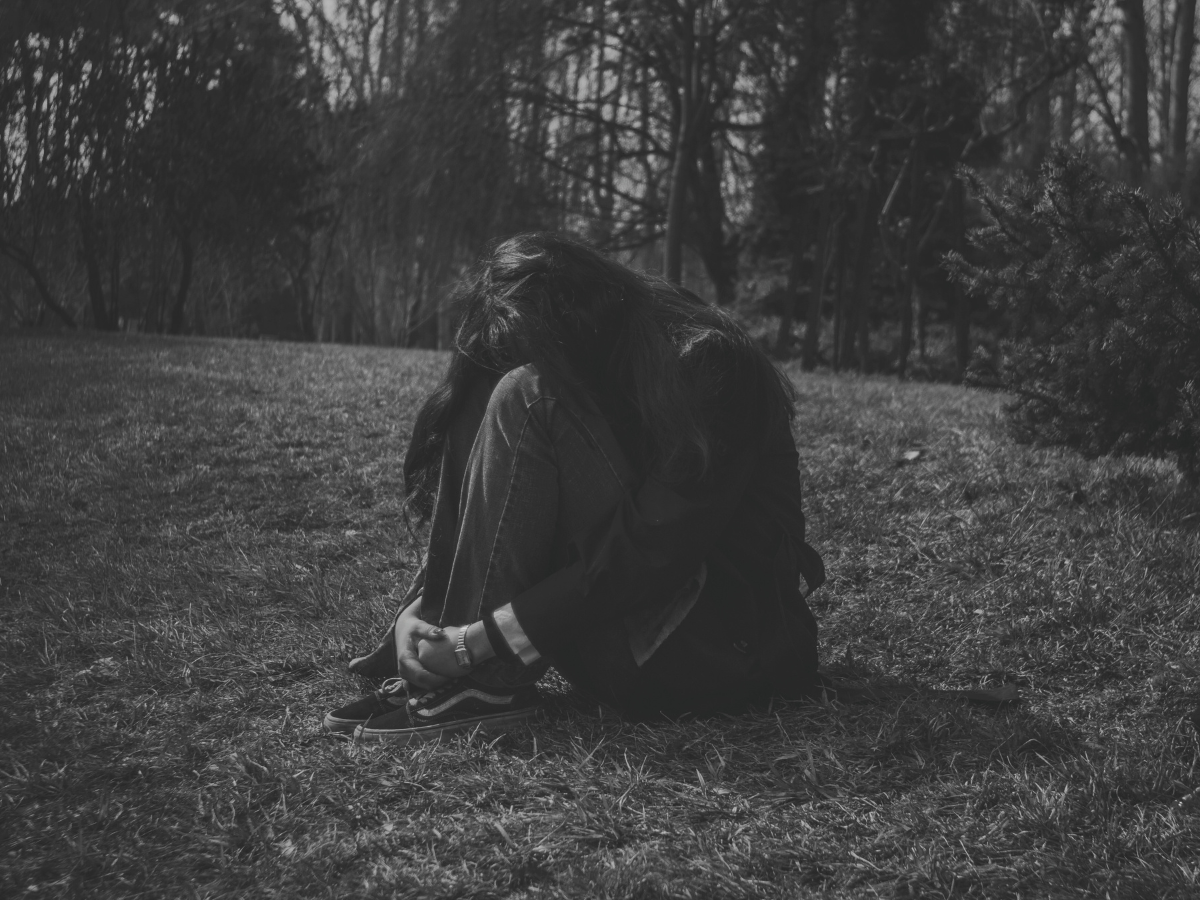
The mental health effects of a toxic relationship in motherhood
No one talks enough about the mental health effects of a toxic relationship, especially during motherhood, when everything looks fine from the outside.
From the outside, I was a new mother. Smiling in photos. Holding my daughters. Standing beside a man who seemed warm, attentive, and admirable. It should have been one of the most supported, sacred seasons of my life.
Instead, inside, I was unraveling.
Postpartum had already worn me down in ways I couldn’t fully explain. The hormonal shifts. The sleepless nights. The identity change that comes with becoming a mother. I was physically exhausted. Mentally drained.
But what made everything heavier wasn’t just motherhood.
It was the constant tension in my own home. The walking on eggshells. The feeling of never fully relaxing in the space that was supposed to be safe.
And slowly, without realizing it, I was living inside the quiet mental health effects of a toxic relationship.
The Moment I Realized I Was Alone
There’s a moment I still remember clearly.
I had mastitis from breastfeeding and was running a fever. My body ached all over. Even the smallest movements felt heavy. I was exhausted, weak, and in pain.
But there was no help.
I was still the one waking up to care for the baby. Still the one preparing food, tending to the house, trying to function while my body begged for rest.
I remember wishing I could just lie down for a while, just long enough for the fever to pass. But I couldn’t.
There was no check-in. No concern. Not even a simple, “How are you feeling?” Instead, I felt like a burden for being sick.
It taught me something quietly terrifying: I could not afford to fall apart.
So I kept going. Because if I didn’t take care of things, no one else would.
But there is one moment I will never forget — a memory that still lives in my body like a scar. The night I truly thought I might lose my baby.
She was eleven months old when she suddenly became sick.
We live on a small island, far from the city. The nearest major hospital was not close. It required a two-and-a-half-hour boat ride, followed by another hour by car.
That night, she began wheezing. Each breath sounded strained, like her tiny chest was fighting for air. Her fever kept rising until it reached 40°C.
At the time, COVID was still everywhere. I was terrified. I remember staring at the thermometer, my heart pounding, a quiet panic settling in my chest. Something was wrong.
I stayed awake the entire night watching her breathe, my heart racing with fear.
At 3 a.m., I told him we needed to take the 5:30 a.m. boat to the city so we could bring her to the hospital.
But he refused. He said she was fine.
I remember feeling completely frozen. My baby was burning with fever, struggling to breathe, and the person who should have helped me protect her was dismissing it.
My instincts were screaming that something was wrong. I felt helpless. Desperate.
So I did the only thing I could think of.
I tried to call his sister, hoping she could convince him. But it was the middle of the night. No answer.
When he realized I was calling her, he became furious. At one point, he nearly threw my phone.
My hands were shaking as I searched for another option.
Out of desperation, I contacted our doctor and described her symptoms. She told me to bring the baby in for a check-up immediately.
Thankfully, this time, he agreed.
But I will never forget the terror of that night… the icy panic in my chest, knowing something was wrong with my baby, and realizing I had to fight just to get her help.
No mother should ever have to fight to protect her sick child. No woman should feel unseen, unheard, and unsafe in the very place that’s supposed to keep her safe.
How Toxic Relationships Affect Mental Health
That was my reality. My feelings were dismissed. My struggles minimized. I was expected to cope, to function, to keep going.
Instead of feeling supported during one of the most vulnerable seasons of my life, I felt completely alone. And without realizing it, I was living inside the slow, invisible mental health effects of a toxic relationship.
This is how it begins. Not always with shouting or obvious abuse. But with subtle erosion.
At first, I thought it was just me. I felt anxious. Irritable. Exhausted in a way that sleep couldn’t fix. I blamed it on hormones.
But over time, I noticed I was struggling and alone, and I couldn’t freely share how I was feeling. I was constantly shrinking myself — softening my tone, silencing my needs, managing his moods just to keep the peace. Especially for my daughters.
Little by little, it eroded my confidence until I barely recognized myself.
My self-worth became fragile.
Living With Two Different Versions of the Same Person
On top of everything, I carried the mental strain of living with two completely different versions of the same person.
In public, he was warm. Admirable. Easy to like. People respected him, trusted him. And I would sit there beside him, smiling while feeling deeply uncomfortable. Because I knew that wasn’t the man I lived with.
I felt angry and frustrated. There were moments I wanted to stand up and say, “That’s not who he is.”
But I stayed silent. No one saw what I saw, and I started to feel like I was the only one living in the truth.
When someone is consistently gentle with the world but harsh with the person closest to them, that’s not a personality flaw. That’s deception.
It’s destabilizing to live with someone who wears a mask so well. It creates a quiet psychological confusion, and you start questioning your own reality. You begin wondering if maybe you’re exaggerating. Maybe you’re too sensitive, or maybe this is normal.
But it’s not normal to feel tense around your own partner. It’s not normal to feel safer when other people are around, to feel invisible in your own pain.
When Survival Mode Becomes Your Normal
I wasn’t living. I was surviving, operating on autopilot, day after day, trying to be strong while feeling completely empty inside.
Until one day, I reached my breaking point. The kind where something inside you finally says,
I can’t live like this anymore.
That was the moment I understood what living inside a toxic relationship had done to my mind.
It had made me anxious. Hyper-aware. Always on edge.
It had made me doubt my instincts. It had slowly convinced me to shrink. To abandon my dreams, my voice, and parts of myself that once felt strong.
And I could not let my daughters grow up believing that this was love.
They deserve not only see what love looks like, but they also deserve to feel it.
They deserve safety. And I wanted to become their safe space.
They deserved a mother who could laugh without heaviness in her chest. A mother who was fully present. A mother who wasn’t just surviving, but living.
And I deserved peace, too.
That was the moment I chose myself.
It was the beginning of finding myself again. The beginning of choosing peace, and reclaiming the woman I had once abandoned.
For the first time, I turned inward and began healing the parts of me I had spent years abandoning.
I committed to the deep work — self-therapy, honest reflection, rebuilding the mental strength I had slowly lost.
I started caring for my body again. I invested in growth, in knowledge, in becoming someone I could trust again. And for the first time in a long time, I stopped silencing my emotions and started listening to what they were trying to tell me.
It wasn’t easy. Some days, I wanted to slip back into what was familiar. Some nights it felt safer to disappear than to face the work of rebuilding. But every step I took toward myself reminded me that survival isn’t enough…
Living fully is the goal.
What I realized most painfully is how deep the mental health effects of a toxic relationship can run. The anxiety, the hyper-awareness, the self-doubt — they don’t vanish overnight. They linger.
They leave invisible marks, subtle but lasting, shaping how you see yourself and the world around you.
For years, I had been surviving. But for the first time in a long time, I chose me. And that choice changed everything.
Still, this was only the beginning. Recognizing the damage was just the first step. The journey of slowly reclaiming my peace, my mind, and my identity had only just begun.
In Part 3, I’ll share the journey of healing and moving forward: how I slowly found my voice again, how I began rebuilding my confidence, and how you, too, can begin choosing yourself, one small, courageous step at a time.
Because choosing yourself isn’t a single moment. It’s a journey.
And it’s a journey worth taking.